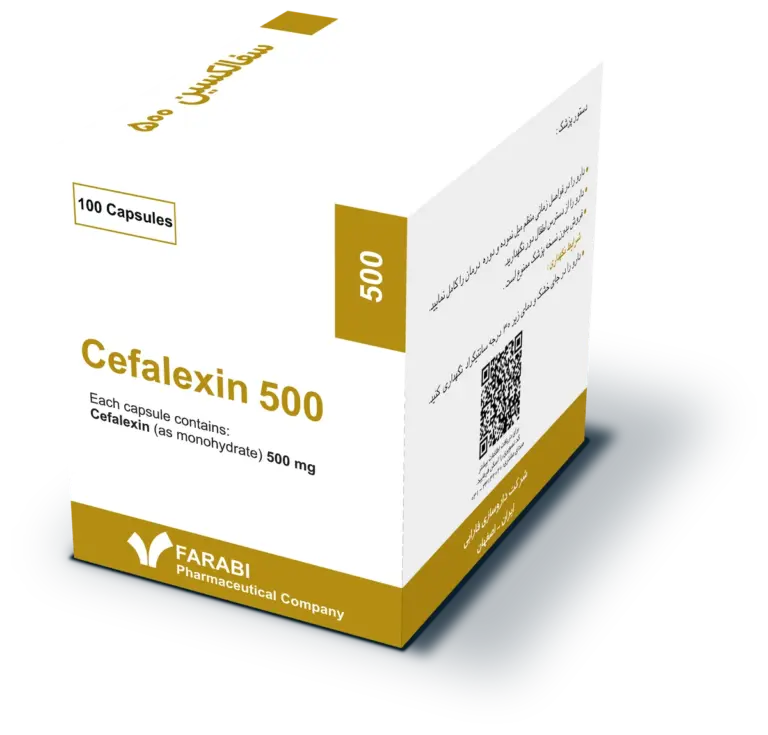
Dosage Forms
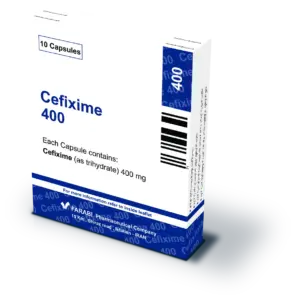
- 400 mg and 200 mg capsules
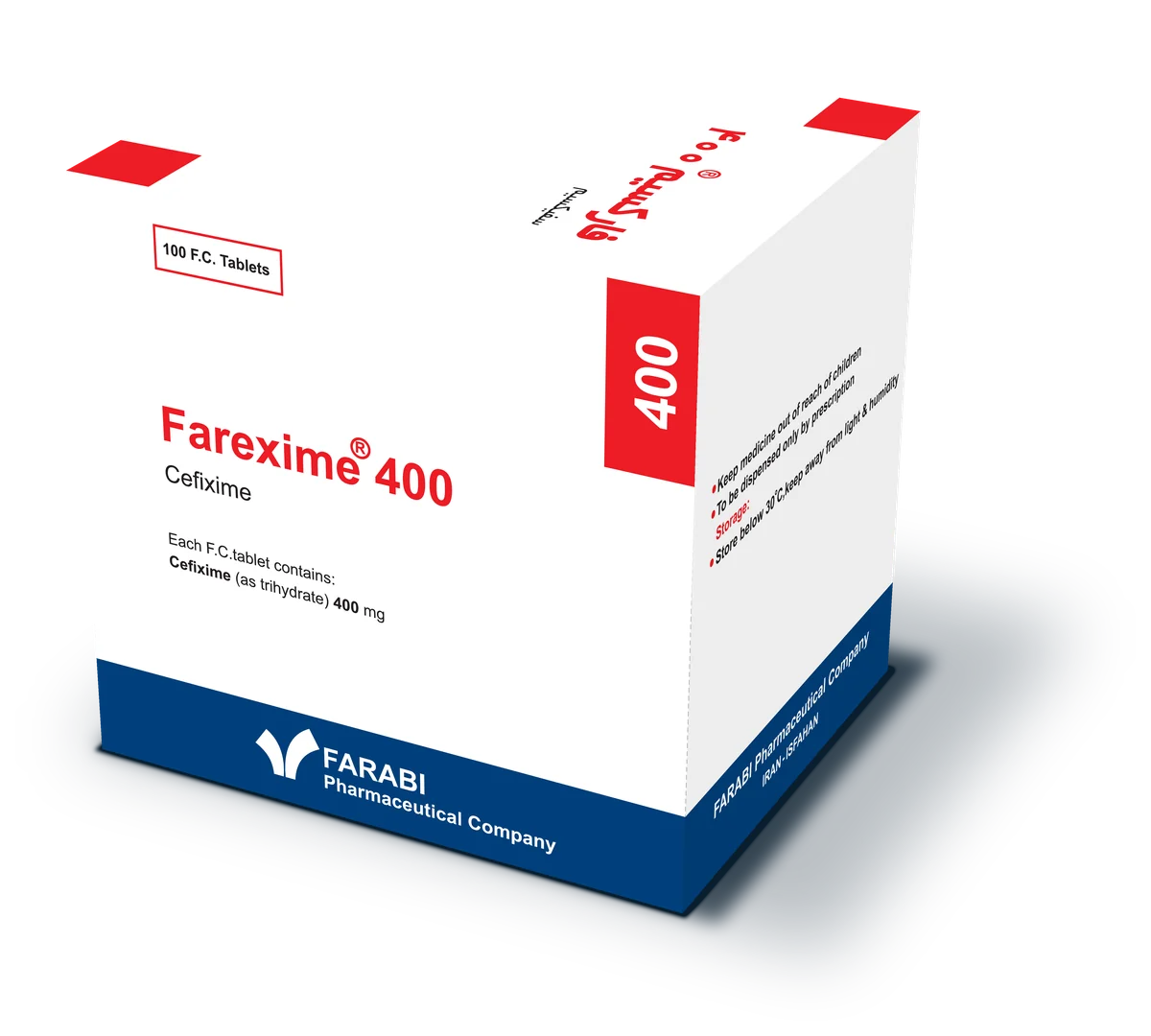
- 400 mg and 200 mg tablets
- 100 mg/5ml powder for oral suspension
Drug Group
Antibiotic, cephalosporins
Packaging
- Blisters or PE flacons contain 10 film coated tablets.
- 10 capsules in one blister. One blister in a box.
- Cefixime: Powder for 100 ml oral suspension.
- Farexime: Powder for 50 ml oral suspension.
Cefixime is given by mouth in the treatment of susceptible infections including gonorrhea, otitis media, pharyngitis, tonsillitis, lower respiratory tract infections such as bronchitis, urinary tract infections, enteric fever and shigellosis.
Cefixime is an oral first-generation cephalosporin. Cephalosporins inhibit bacterial cell wall synthesis. Cefixime is a bactericidal antibiotic and is stable to hydrolysis by many beta–lactamases. It has a mode of action and spectrum of activity similar to that of third generation cephalosporin, cefotaxime, but some entrobacteriacea are less susceptible to cefixime. Haemophilus influenzae, Moraxella catarrhalis and Neisseria gonorrhoeae, including penicillinase-producing strains, are sensitive but most strains of staphylococci, enterococci, and Listeria spp. are not. Enterobacter spp., Pseudomonas aeruginosa, and Bacteroides spp. are resistant to cefixime.
Cefixime should be used with caution in patients with history of GI diseases, especially ulcerative colitis, regional enteritis, or antibiotic-associated colitis. A reduced dosage is recommended in patients with renal function impairment receiving cefixime.
The most frequent reported adverse effects of cefixime are gastrointestinal disturbances, especially diarrhea. Cefixime should be discontinued if diarrhea is severe. Although cefixime does not have the N-methylthiotetrazole side-chain usually associated with hypoprothrombinaemia, increases in prothrombin times have occurred in a few patients. Skin rashes, urticaria, eosinophilia, fever and transient hepatitis and cholestatic jaundice have been reported.
Cefixime crosses the placenta. Use during pregnancy only when clearly needed. Cefixime is excreted in breast milk in small quantities. Therefore, cefixime should be used with caution in nursing women, and consideration should be given to temporarily discontinuing nursing during therapy with the drug.
Care should be exercised in patients receiving anticoagulants and cefixime concomitantly due to the possibility that cefixime may increase prothrombin times. Concomitant administration of cefixime and carbamazepine or nifedipine may result in increased plasma carbamazepine or cefixime concentrations, respectively. A false-positive reaction for urine glucose may occur in non-enzymatic tests using cupric sulfate.