
Dosage Forms
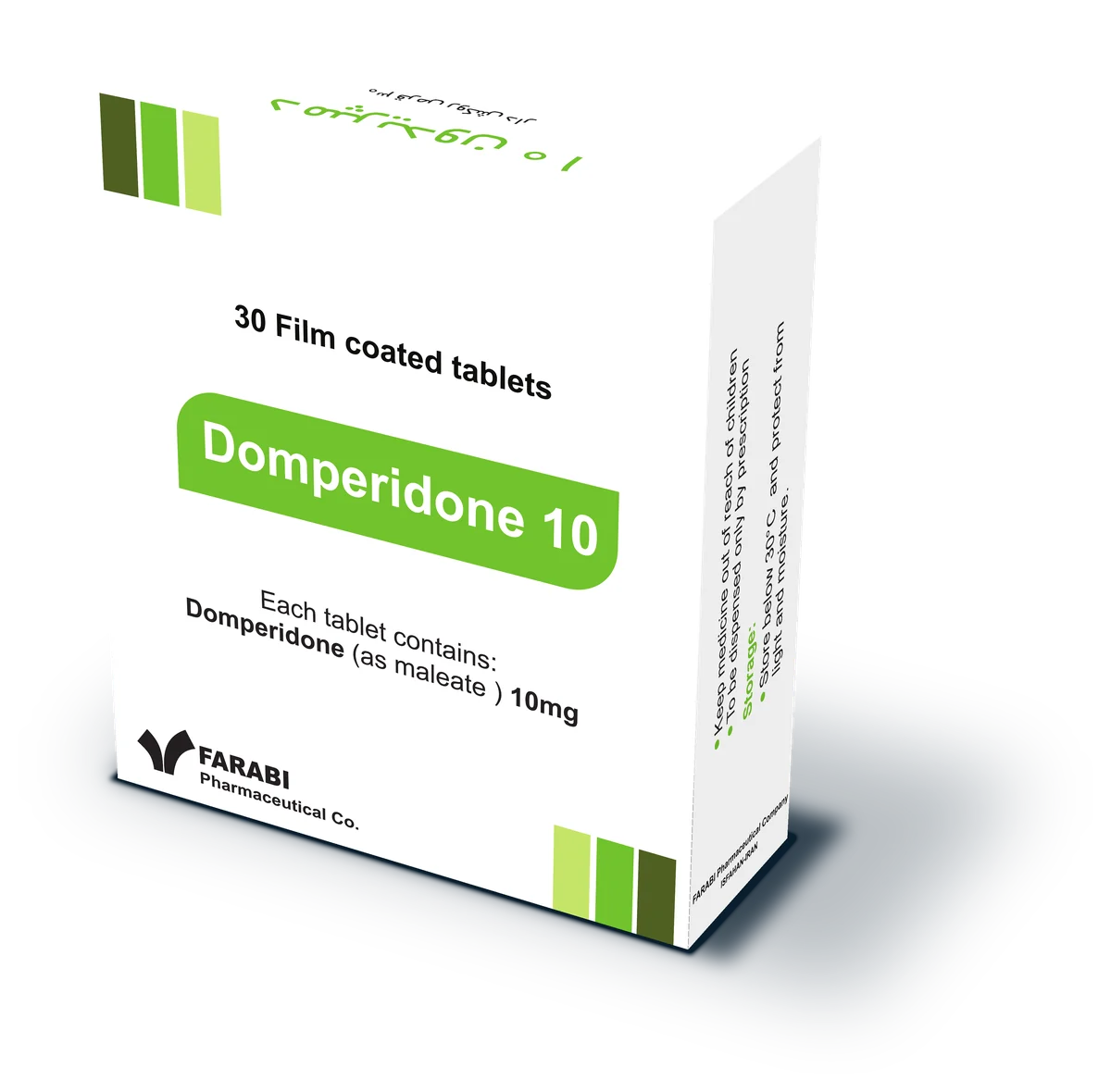
- 10 mg tablets
Drug Group
Dopamine antagonist
Packaging
- 10 tablets in one blister. 3 blisters in a box.
Domperidone is indicated for treatment of delayed gastric emptying of functional origin with gastro-oesophageal reflux and/or dyspepsia, Control of nausea and vomiting of central or local origin, as an anti-emetic in patients receiving cytostatic and radiation therapy, Facilitates radiological examination of the upper gastro-intestinal tract.
Domperidone is a dopamine antagonist with actions and uses similar to those of metoclopramide. It is used as an antiemetic for the short-term treatment of nausea and vomiting of various aetiologies and dyspepsia.
This drug should not be used whenever stimulation of gastric motility is to be avoided or could be harmful, e.g. in the presence of gastro-intestinal haemorrhage, obstruction or perforation. Since domperidone is highly metabolised in the liver, it should be used with caution in patients with hepatic impairment (and in the elderly).
Allergic reactions, such as rash or urticaria and also abdominal cramps have been reported. Dystonic reactions (extra pyramidal phenomena) may occur. Reversible raised serum prolactin levels have been observed which may lead to galactorrhoea and gynaecomastia. Hypertensive crises in patients with phaeochromocytoma may occur with administration of domperidone. Where the blood brain barrier is not fully developed (mainly in young babies) or is impaired, the possible occurrence of neurological side-effects cannot be totally excluded.
Pregnancy category B. Studies on pregnancy have not been done in humans. No adverse effects have been observed in breast-fed infants whose mothers were receiving domperidone, and it is usually compatible with breast feeding.
Concomitant administration of anti-cholinergic drugs may inhibit the anti-dyspeptic effects of domperidone. Anti-muscarinic agents and opioid analgesics may antagonise the effect of domperidone. Domperidone suppresses the peripheral effects (digestive disorders, nausea and vomiting) of dopaminergic agonists. Since domperidone has gastro-kinetic effects, it could influence the absorption of concomitant orally administered medicines, particularly those with sustained release or enteric coated formulations. As domperidone interferes with serum prolactin levels, it may interfere with other hypoprolactinaemic agents and with some diagnostic tests. Antacids and anti-secretory agents lower the oral bioavailability of domperidone. They should be taken after meals and not before meals, i.e. they should not be taken simultaneously with domperidone.