
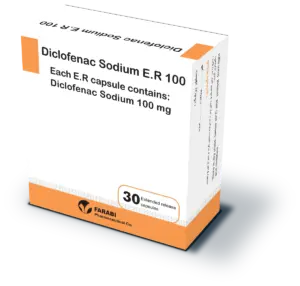
Dosage Forms
- 100 mg extended-release capsules
Drug Group
Non-Steroidal Anti-Inflammatory Drugs (NSAIDs)
Packaging
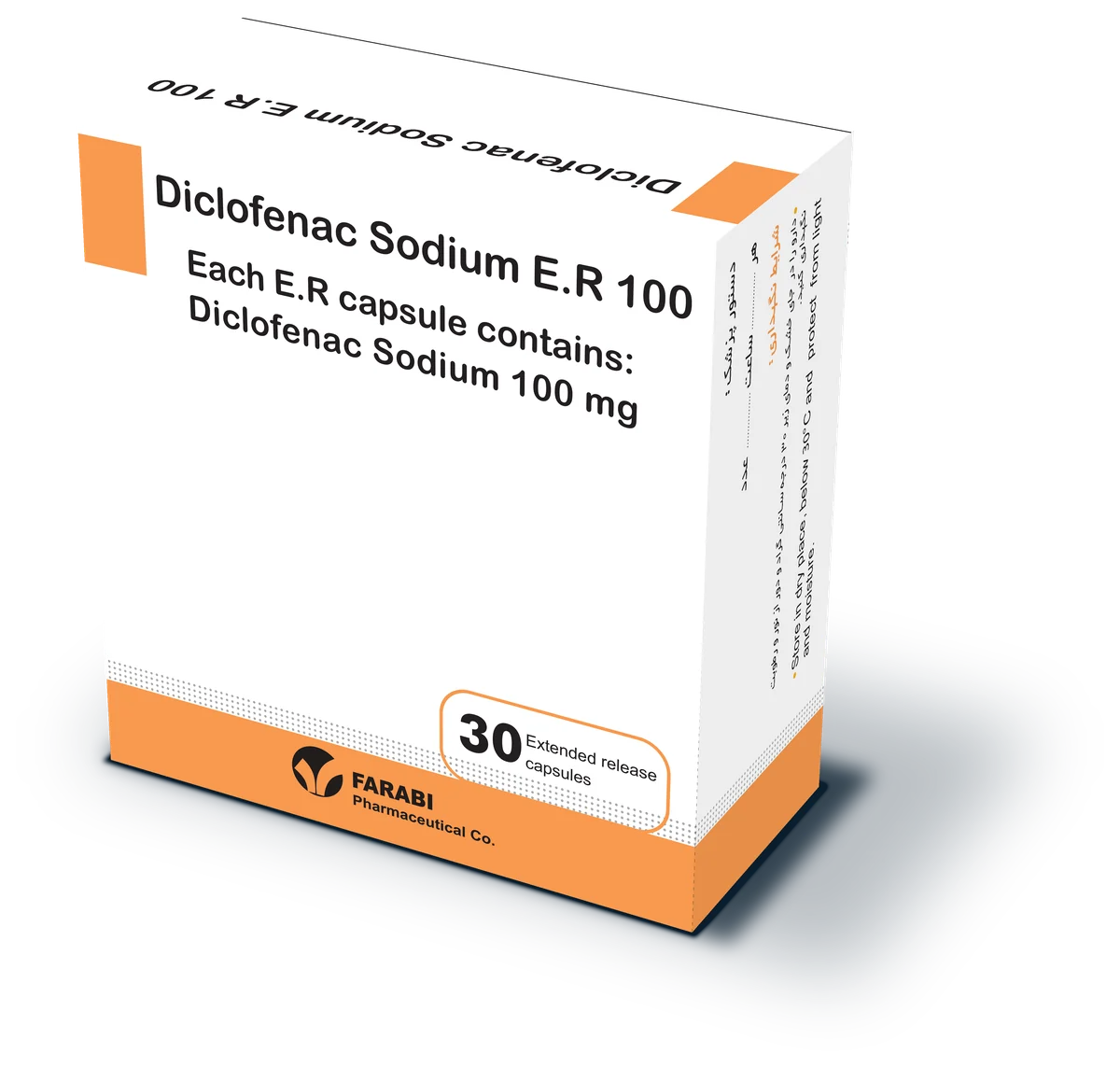
- 10 capsules in one blister. 3 blisters in a box.
For relief of the signs and symptoms of osteoarthritis, for relief of the signs and symptoms of rheumatoid arthritis.
Diclofenac sodium extended-release capsules exhibits anti-inflammatory, analgesic, and antipyretic activities in animal models. The mechanism of action of diclofenac sodium, like that of other NSAIDs, is not completely understood but may be related to cyclooxygenase inhibition.
Diclofenac is contra-indicated in patients with severe hepatic or renal impairment. in patients with a history of hypersensitivity to aspirin or any other NSAIDs which includes those in whom attacks of asthma, angioedema, urticaria or rhinitis have been precipitated by aspirin or any other NSAIDs), and in coagulation defects.
Gastrointestinal experiences including: abdominal pain, constipation, diarrhea, dyspepsia, flatulence, gross bleeding/perforation, heartburn, nausea, GI ulcers (gastric/duodenal) and vomiting. Abnormal renal function, anemia, dizziness, edema, elevated liver enzymes, headaches, increased bleeding time, pruritus, rashes and tinnitus, photosensitivity, sweating increased and myalgia.
Pregnancy category C. Most manufacturers advise avoiding the use of NSAIDs during pregnancy or avoiding them unless the potential benefit outweighs the risk. NSAIDs should be used with caution during breast-feeding.
Aspirin: potential of increased adverse effects Methotrexate: enhance the toxicity of methotrexate Cyclosporine: increase cyclosporine’s nephrotoxicity ACE Inhibitors: diminish the antihypertensive effect of ACE inhibitors. Furosemide, Thiazide and Thiazide-like Diuretics: Diclofenac -XR can reduce the natriuretic effect of furosemide and thiazides. Lithium: NSAIDs have produced an elevation of plasma lithium levels and a reduction in renal lithium clearance. Warfarin: The effects of warfarin and NSAIDs on GI bleeding are synergistic, such that users of both drugs together have a risk of serious GI bleeding higher than users of either drug alone.