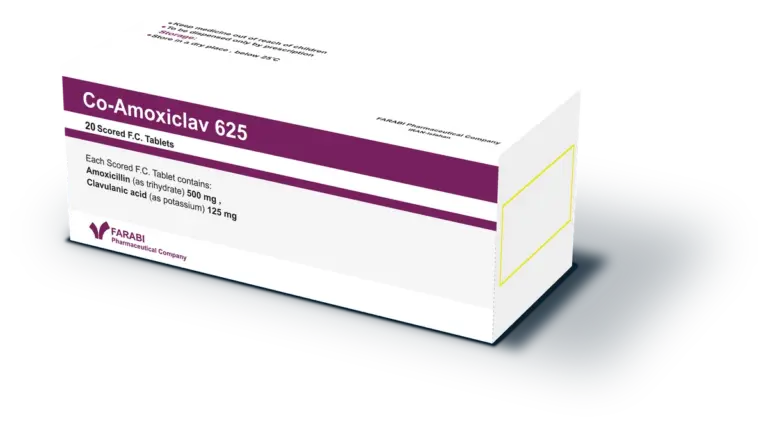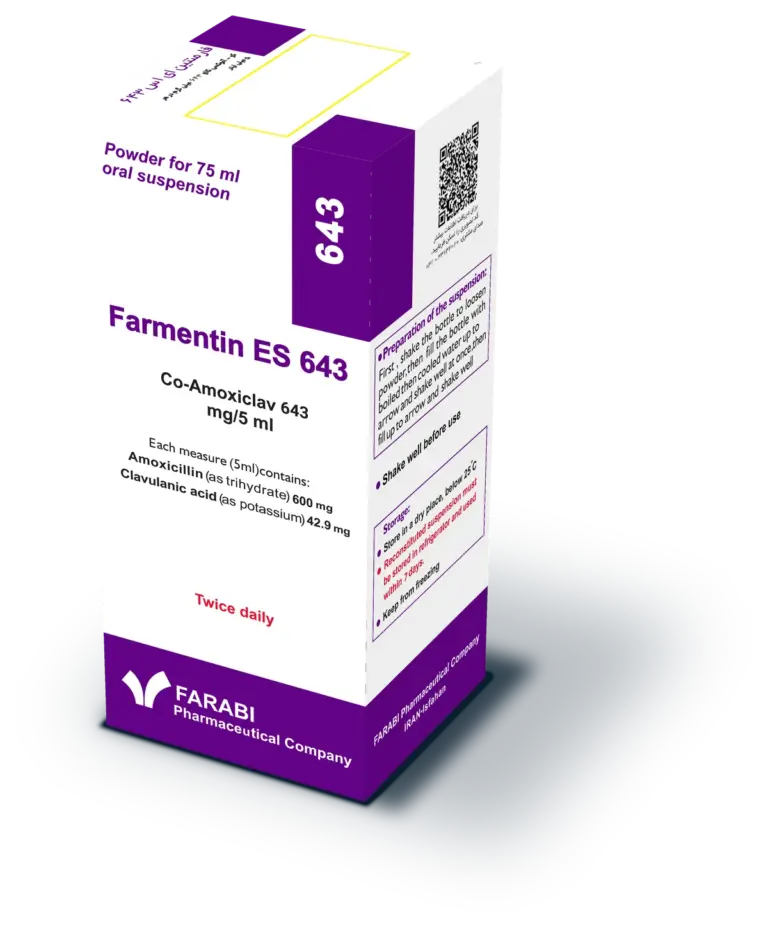

Dosage Forms
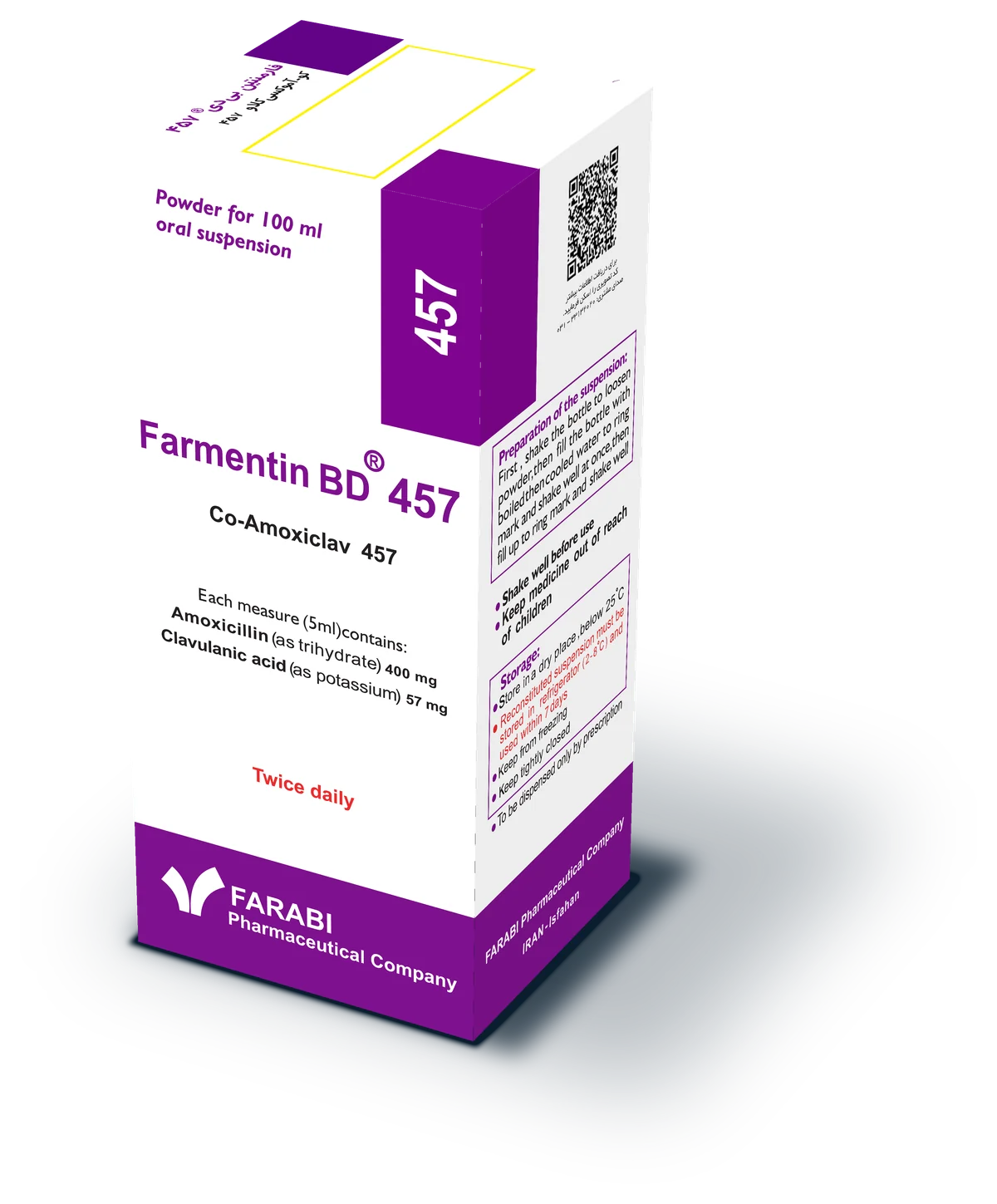
- Farmentin BD 457 powder for oral suspension, after reconstitution each measure (5ml) contains 400 mg Amoxicillin and 57 mg Clavulanic acid (as potassium).
- Farmentin BD 228 powder for oral suspension, after reconstitution each measure (5ml) contains 200 mg Amoxicillin and 28.5 mg Clavulanic acid (as potassium).
Drug Group
Antibiotic, Beta-lactam + Beta-lactamase inhibitor
Packaging
Powder for 100 ml oral suspensions.
Co-Amoxiclav is given by mouth in the treatment of bacterial infections of lower respiratory tract, otitis media, sinusitis, recurrent tonsillitis, skin and skin structure infections and urinary tract infections.
Co-Amoxiclav is betalactam antibiotic that inhibits the biosynthesis of cell wall of bacteria. Clavulanic acid has a high affinity for and binds to certain betalactamases that generally inactivate amoxicillin. Co-Amoxiclav is active against H. influenzae, M. catarrhalis, S. aureus, E. coli, Klebsiella sp. and Entrobacter sp.
Co-Amoxiclav is not indicated in history of hypersensitivity to penicillins, cephalosporins, imipenem and betalactamase inhibitors. Co-Amoxiclav should be used with caution in patients with evidence of hepatic dysfunction and GI disease especially antibiotic-associated colitis. In renal impairment, reduction in dosage or increase in dosing interval is recommended. The suspensions contain aspartame and should not be used by phenylketonurics. Co-Amoxiclav in patients with infectious mononucleosis should not be used.
Diarrhea, hepatitis, cholestatic jaundice, pseudomembranous colitis, erythema multiforme, Stevens-Johnson syndrome, toxic epidermal necrolysis and exfoliative dermatitis have been reported.
Co-Amoxiclav crosses the placenta. Use during pregnancy only if clearly needed. Small amounts of amoxicillin are distributed into breast milk. The use of Co-Amoxiclav may cause diarrhea, candidiasis or allergic response in the nursing infants.
Probenecid prolongs the half-life of amoxicillin. Amoxicillin may also interact with bacteriostatic antibacterials. Co-Amoxiclav may reduce the efficacy of oral contraceptives. Concomitant use of allopurinol and amoxicillin should be avoided. Increases in prothrombin time have been reported in patients taking Co-Amoxiclav concurrently with anticoagulants. False-positive urine glucose reactions may occur in non-enzymatic tests using cupric sulfate in penicillin therapy.