
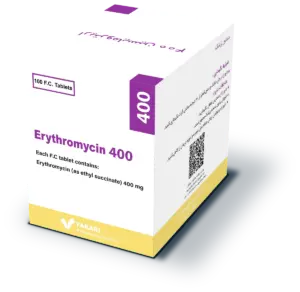

Dosage Forms
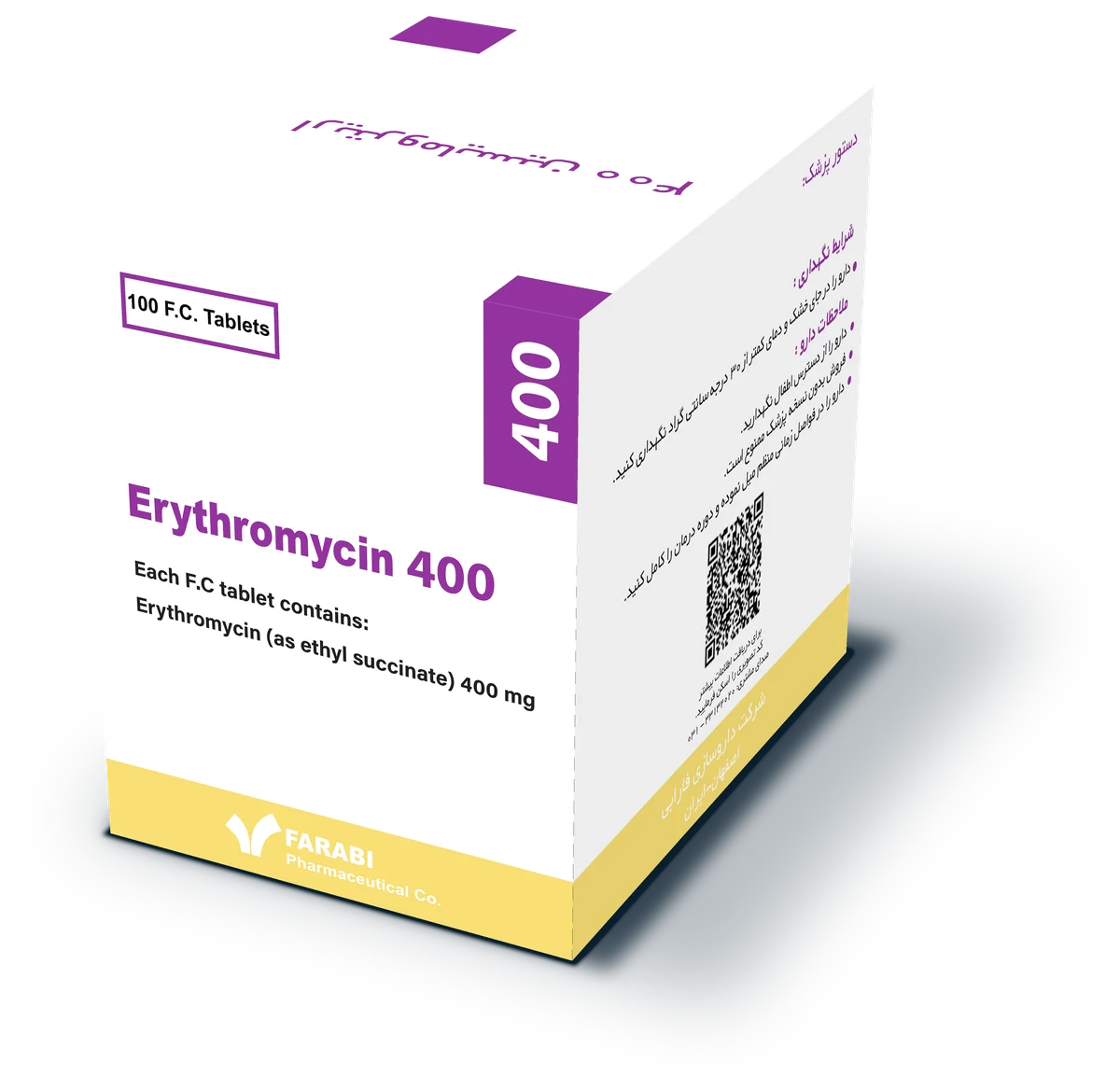
- 400 mg and 200 mg tablets
- 200 mg/5ml powder for oral suspension
Drug Group
Antibiotic, macrolide
Packaging
- 10 tablets in one blister. 10 blisters in a box.
- Powder for 100 ml oral suspension.
Erythromycin has been used in the treatment of a wide variety of infections caused by susceptible organisms: upper respiratory tract infections (mild to moderate severity), lower respiratory tract infections (mild to moderate severity), respiratory tract infections, skin/skin structure infections (mild to moderate severity), pertussis (whooping cough), diphtheria, erythrasma, intestinal amebiasis, Pelvic inflammatory disease (PID), conjunctivitis of newborn, pneumonia of infancy, urogenital infections during uncomplicated urethral, endocervical, or rectal infections in adults, primary syphilis, legionnaire’s disease, rheumatic fever, bacterial endocarditis, Listeria monocytogenes infections.
Erythromycin is a macrolide antibiotic with a wide spectrum of activity. It reversibly binds to the P site of the 50S ribosomal subunit of susceptible organisms and may inhibits RNA-dependent protein. It may be bacteriostatic or bactericidal, depending on such factors as drug concentration.
Hypersensitivity to any of the macrolide antibiotics and patients receiving astemizole, cisapride, or pimozide. Erythromycin may aggravate the weakness of patients with myasthenia gravis. Serious allergic reactions, including anaphylaxis, have occurred with Erythromycin. Renal/Hepatic function impairment may be occurred. Erythromycin should be used with caution in patients with pseudomembranus colitis.
Erythromycin and its salts and esters are generally well tolerated and serious adverse effects are rare. Gastrointestinal disturbances such as abdominal discomfort and cramp, nausea, vomiting, and diarrhea are common. Hypersensitivity reactions appear to be uncommon, having been reported in about 0.5% of patients, and include pruritus, urticaria and skin rash as well as occasional cases of anaphylaxis. A hypersensitivity reaction may also be responsible for the hepatotoxicity sometimes reported in patients receiving Erythromycin or its derivatives. Hearing loss more likely to occur with administration of high doses (≥ 4 grams per day) in patients with renal or hepatic disease and /or in elderly patients. Hearing loss is usually reversible. Other adverse effects that have been reported in patients receiving erythromycin include agranulocytosis, arrhythmias, central neurotoxicity including psychotic reactions and nightmares, a myasthenia-line syndrome, and pancreatitis.
Pregnancy category B. Use erythromycin only when clearly needed. Erythromycin is considered compatible with breast-feeding.
Erythromycins may inhibit carbamazepine and valproic acid metabolism, resulting in increased anticonvulsant plasma concentrations and toxicity. Erythromycins may displace these medications from, or prevent them from binding to, 50 S subunits of bacterial ribosomes, thus antagonizing the effects of chloramphenicol and lincomycins. It may increase cyclosporine, digoxin and buspirone plasma concentrations. It may deacrease the clearance of midazolam, triazolam, warfarin and theophylline.