
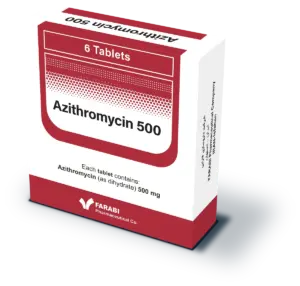
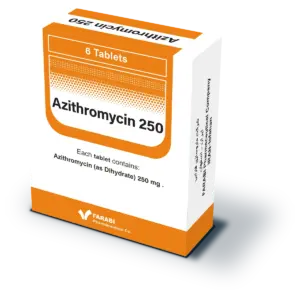
Dosage Forms
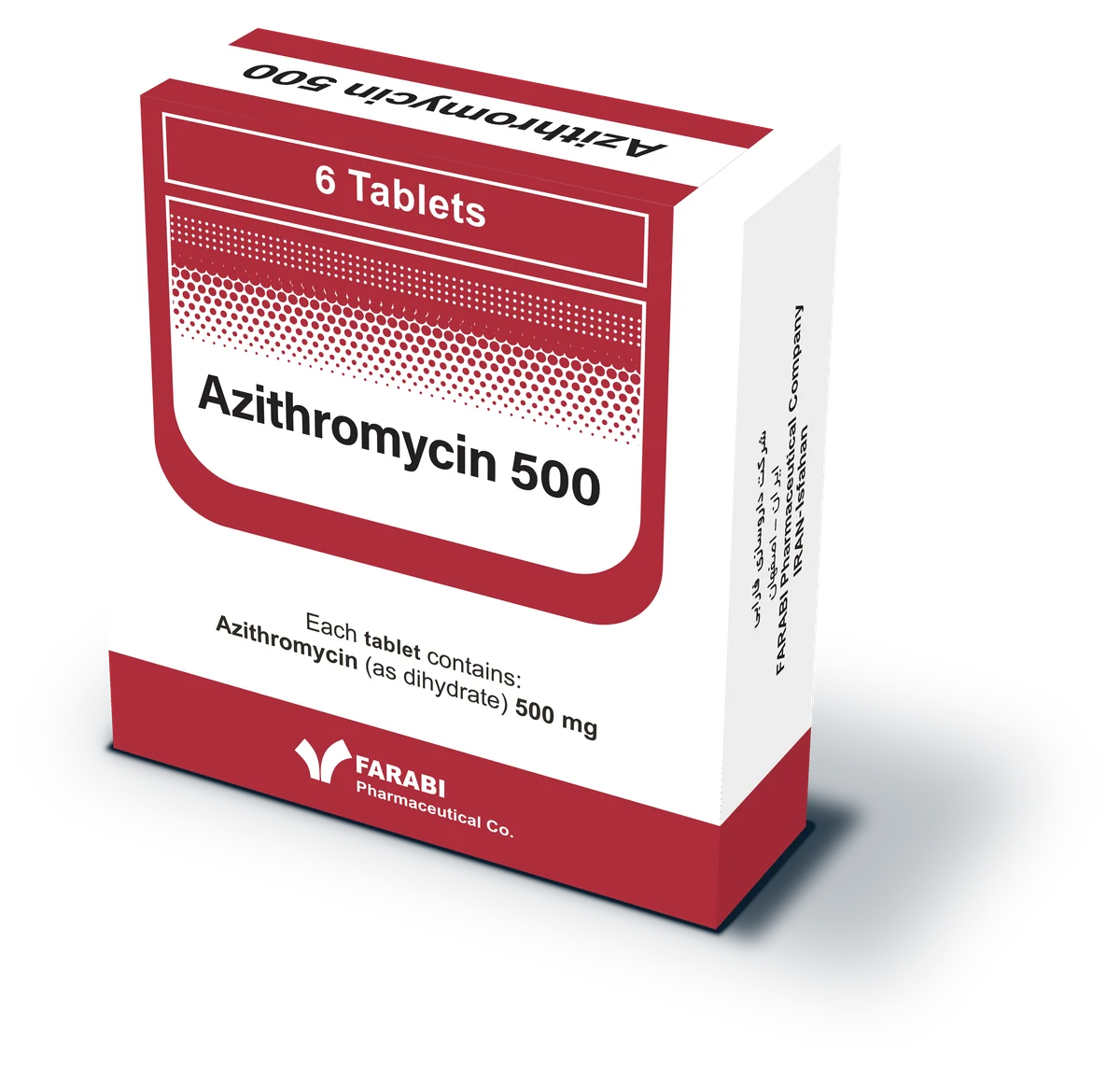
- 500 mg and 250 mg tablets
- 500 mg and 250 mg capsules
- 200 mg/5ml and 100 mg/5ml powder for oral suspensions
Drug Group
Antibiotics, Macrolide
Packaging
- 6 Capsules or tablets in a one blister. 1 blister in a box.
- Powder for 30 ml oral suspensions.
Respiratory-tract infections; otitis media; skin and soft-tissue infections; uncomplicated gonorrhoea (unlicensed indication), uncomplicated genital chlamydial infections and non-gonococcal urethritis, mild or moderate typhoid due to multiple-antibacterial-resistant organisms (unlicensed indication); Lyme disease (unlicensed indication); prophylaxis of group A streptococcal infection.
It reversibly binds to the P site of the 50S ribosomal subunit of susceptible organisms and may inhibit RNA-dependent protein. It may be bacteriostatic or bactericidal, depending on such factors as drug concentration.
Hypersensitivity to any of the macrolide antibiotics or ketolide antibiotics (like telithromycin). Azithromycin should be used with caution in patients with hepatic or renal impairment. Azithromycin should not be used in patients with pneumonia who are judged to be inappropriate for oral therapy because of moderate to severe illness or risk factors. Prescribing antibiotics (including azithromycin) in the absence of a proven bacterial infection is unlikely to provide benefit to the patient and increases the risk of development or drug resistant bacteria. Azithromycin may aggravate the weakness of patients with myasthenia gravis. Azithromycin suspensions contain aspartame and should not be used by phenylkrtonurics.
Anorexia, dyspepsia, flatulence, dizziness, headache, malaise, paraesthesia, arthralgia, disturbances in taste and vision; less commonly constipation, gastritis, chest pain, oedema, anxiety, sleep disturbances, hypoaesthesia, leucopenia, photosensitivity; rarely agitation; also reported syncope, convulsions, smell disturbances, interstitial nephritis, acute renal failure, thrombocytopenia, haemolytic anaemia, tongue discoloration
Category B. Azithromycin crosses the placenta but fetal plasma levels generally low. Use only when clearly needed. Breast-feeding: present in milk; use only if no suitable alternatives.
Absorption of azithromycin may be reduced by antacids. Azithromycin increases plasma concentration of disopyramide. Avoid concomitant use with rifabutin; increased risk of side effects including neutropenia exists when azithromycin is given with rifabutin. Azithromycin possibly enhances the anticoagulant effects of cumarins (warfarin). Azithromycin possibly increase the risk of colchicine toxicity, suspend or reduce dose of colchicine. (Avoid concomitant use in hepatic or renal impairment). Azithromycin may increase pimozide plasma concentrations and cardiotoxicity may occur. Coadministration is contraindicated. Coadministration with cisapride is contraindicated as it could lead to cardiac arrhythmias.